Thursday, February 12, 2015

{Nature} :: Two Birds and some Stones

Ok, this really has nothing to do with the idiomatic phrase Kill two birds with one stone, but we did come upon two dead birds today on a nature walk.
And they were lying on stones.

Anyway!

Yes, we came upon two birds. One in the creek bed. Definitely a buzzard:


Can you see that tiny skull, center-left?
It is smaller than I imagined a buzzard-head to be.


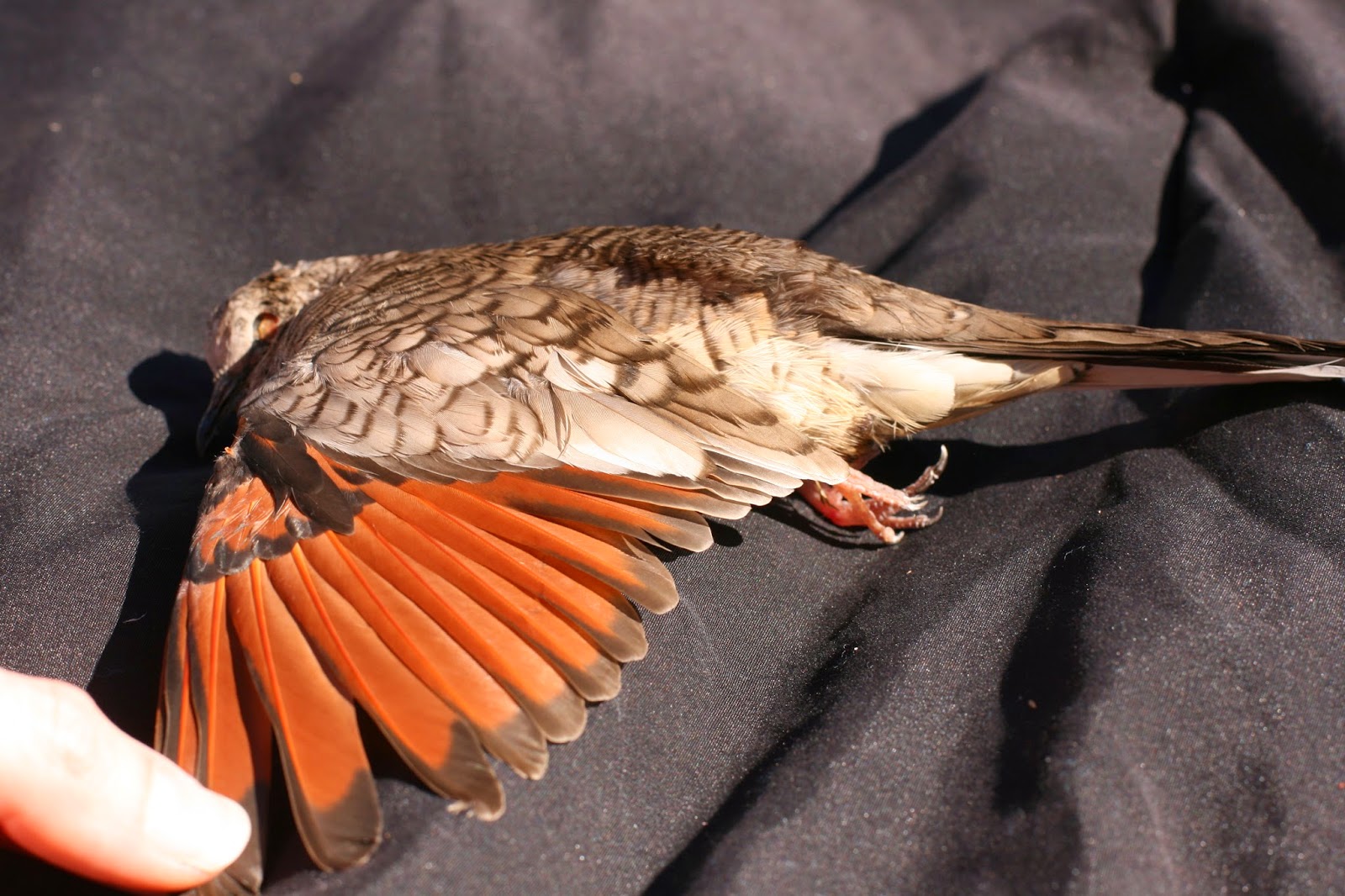
The other bird, still intact ... an Inca Dove (placed in our yard for photo):


Aren't the inner rufous-colored feathers pretty?


So into our Nature Notebooks went the drawings of the Inca Dove, or Columbina inca.

The kids used this image to copy a bird in flight:


Here is Alice's (AOy1) entry:


And Royal's (AOy3):


Tuesday, February 10, 2015

{Handicrafts} :: Bug House

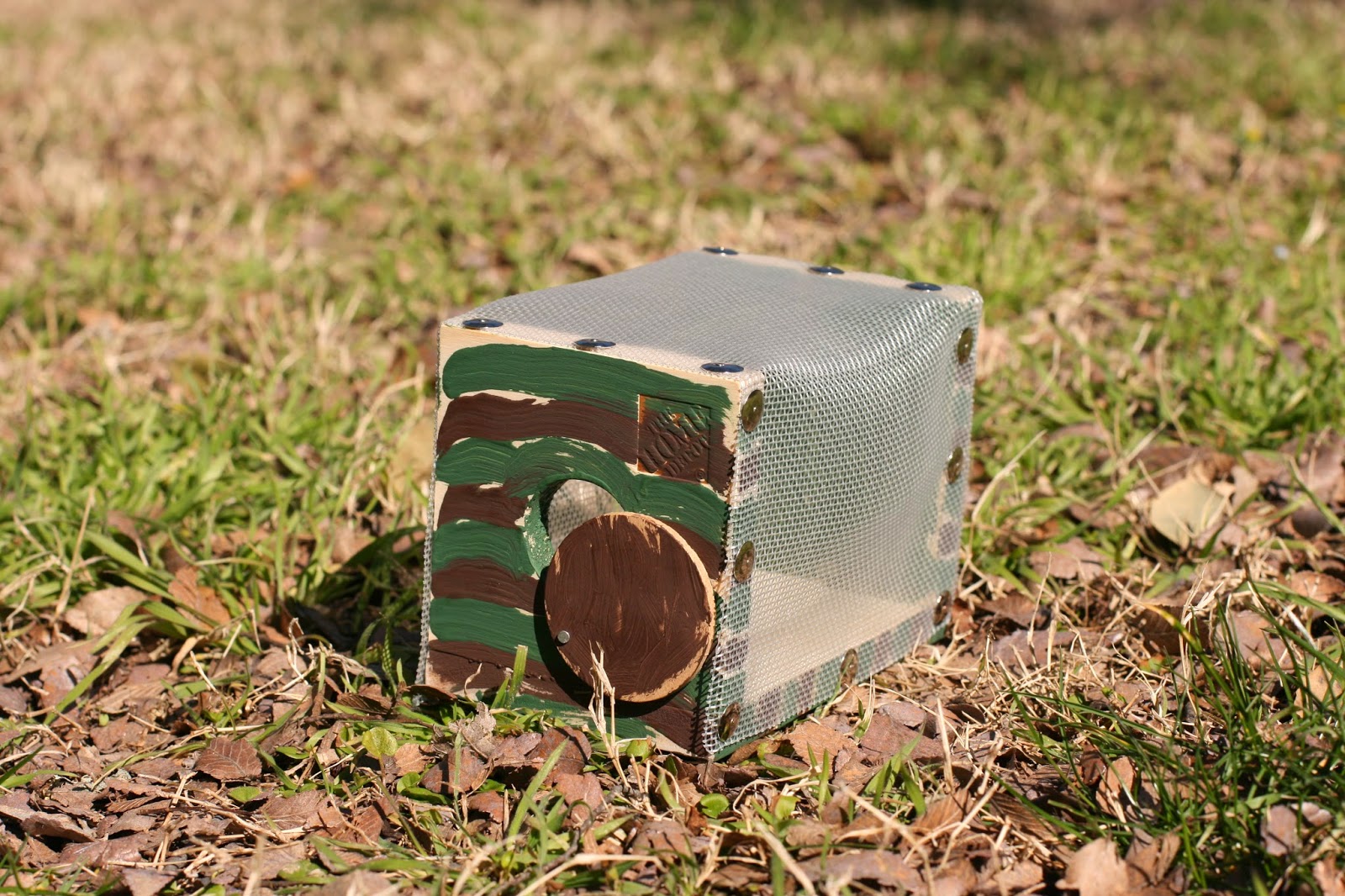
This little DIY project set was a gift from some good friends of ours awhile back: a bug house to build.

I am trying to find practical handicrafts for Royal and Alice ... things that they both will enjoy. 
So I figured after the hand-stitched cards, I had better look for something more boyish. 
But, as it happens, both kids really like trying their hand at these seemingly gender-specific handicrafts.


That is the capital charge against most schools.
The teachers underrate the tastes and abilities of their pupils.
-CM, Vol 6: A Philosophy of Education, p 52


Our aim in education is to give children vital interests in as many directions as possible 
-- to set their feet in a large room -- 
because the crying evil of the day is, it seems to me, intellectual inanition.
-CM, Vol 3: School Education, p 231

...
So we talked about sanding, and how you need to take note of the direction of the wood's grain. 
(Oh, and what is "grain"?)
 So we defined that, then decided which way we should sand before getting to work...


After preparing a nice, smooth surface, we used a little wood glue and nailed the frame together.
We talked about how to hold a hammer properly to get maximum power out of your swing.


Don't you just love Alice in her Little House attire?


So after the wood glue dried, Royal went on to paint the house camouflage...


And then after tacking the screen around, it was finished.


Now just to wait for spring when bugs abound!


Monday, February 9, 2015

{Nature} :: A Stroll in the Park

Even for Texas, our winter seems to be unseasonably warm.
We have been enjoying lots of wonderfully spring-like temperatures and beautiful days...
which lends itself to some nice nature walks!

One we went on not long ago was at a local park along the river's edge.


Here we enjoyed seeing a variety of trees ... and even a blue heron rather close. It flew away before I could get my camera out, but it was impressive to see how large these birds really are!

Anyway, back to the trees.

One we have been noticing more this time of year is the China Berry.


So Royal wanted to enter this one into his Nature Notebook:


As you may notice in his book, the China Berry (or Melia Azedarach) is a native of the Himalayas.
How cool to think that Marco Polo might have noticed these trees those oh-so-many years ago along his route to Cathay!


Another day while having a picnic in our front yard, we saw these tiny little pearl-like berries that had dropped onto our blanket. A little while later, Royal noticed they were from the mistletoe, which enjoys residence in our cedar elm trees.


Alice decided she wanted to sketch the American mistletoe (or Phoradendron flovescens):


And we continue to add our collected specimens to a centerpiece vase to enjoy throughout this year...


Tuesday, February 3, 2015

{Keeping} :: My Commonplace ... and some reflections

I have just begun a fun-for-me read entitled: Between Worlds: Essays on Culture and Belonging


I was drawn to this for a couple of reasons:
1. I love learning about & experiencing other cultures and hearing other people's stories about living abroad.
2. We were missionaries for 6 years, and although I did not grow up abroad, I definitely began to have a sense of being in between worlds ... like I didn't have a place of real belonging, either in the States or in Latin America. It was a strange place to be, so I can totally imagine what a Third Culture Kid (TCK) may sense.
(Oh, and #3: it was free for Kindle the other day!) teehee :-)

So the author, Marilyn R. Gardner, was an MK (missionary kid) in Pakistan. Her parents began their work there in 1954.

Here is an excerpt of a portion of one of her essays of the many memories she holds dear while away at boarding school:


I've written before that there can be strength in remembering. 
And the Chai Shop is a memory that gives strength.
... ... ...
Rumor has it that the building that housed the chai shop has been torn down - one more brick taken out of our wall of memories. 
Perhaps writing helps keep some of the bricks intact, because memories are precious and, if used properly, give strength for the present.


I can't help but connect what she reveals here with the idea of Keeping. She is keeping her memories alive by writing them down and reflecting on how her past has had a profound impact on her present.

I am really enthralled with this idea of keeping notebooks, and in The Living Page Laurie Bestvater expresses well what Miss Mason proclaims about the "blank page":

[It] secures personhood by slowing us down, causing us to reflect, choose, sort, and ruminate.
-p 112

And isn't this similar to what Mrs. Gardner has done in her essays? She has apparently done much reflecting, choosing, sorting and ruminating in order to secure her personhood.

...

Would that we all look back ... Or even better yet, start now to make notes of important, vital happenings, thoughts, quotes, poems, hymns, natural discoveries, and everyday observations. And in this writing, perhaps it will also help us to keep some of the bricks intact.

Friday, January 30, 2015

Noli me tangere :: Giotto v. Fra Angelico

Have you studied these artists?
We studied Giotto about two years ago and are currently studying Fra Angelico.
Did you know they were both from the same place in Italy?
Did you know they both have a painting entitled Noli me tangere?
Giotto
Take a look:


Fra Angelico


Make some observations of similarities and differences.


Read the Biblical account here:
John 20:14-17


Wednesday, January 28, 2015

100: What is that?!?

Royal was working on a Mental Math page today by himself. Afterwards, I looked over his work. 
Finding it without error, I wrote on the top of the page: 100


just for kicks, you know?

When I showed him what I wrote (and I never write a grade on his work ... why, really?), he asks: 

What? What is that?


It is unnecessary to stimulate these young scholars by marks, prizes, etc.
-CM, Vol 6: A Philosophy of Education, p 28


And it hit me.
It made me think again on the atmosphere of education.
If we habitually use marks, or grades, to illustrate to the child his progress, or skills, soon (and faster than we know it) he will begin to form a dependency on a number and altogether lose sight of the purpose of education.


In an educational environment, we do ... harm when we offer ... high marks for work well done, rather than let a child have the satisfaction of knowing that he has learned something new, has gone a little further in a meaty book, has solved a difficult problem correctly, 
and has grown a little in the process.
-Karen Glass, Consider This, p 66

But a school may be working hard, not for love of knowledge, but for love of marks, our old enemy; and then young faces are not serene and joyous 
but eager, restless, apt to look anxious and worried.
-CM, Vol 6: A Philosophy of Education, p 98

Monday, January 26, 2015

{Artist Study} :: Fra Angelico

Artist Study is one of the kids' favorite little "extras".
Because they spend so much time on it, I save it for the last activity of the day. 

I do the Picture Study, per Miss Mason's suggestions, and it really is a wonderfully simple, yet powerful, learning experience.


We cannot measure the influence that one or another artist has upon the child's sense of beauty, upon his power of seeing, as in a picture, the common sights of life; he is enriched more than we know in having really looked at even a single picture.
-CM, Vol 1: Home Education, p 309

My 8yo son's own depiction of Noli me tangere, by Fra Angelico


We attach a good deal of value to what we call picture talks, that is: - a reproduction of a suitable picture ... is put into the children's hands, and they study it by themselves. Then, children of from six to nine describe the picture, giving all the details and showing by a few lines on the blackboard where is such a tree or such a house; judging if they can the time of day; discovering the story if there be one. The older children add to this some study of the lines of composition, light and shade, the particular style of the master; and reproduce from memory certain details. The object of these lessons is that the pupils should learn how to appreciate rather than how to produce.
-CM, Vol 3: School Education, p 239


A study of the Resurrection of Christ and Women at the Tomb:


Although I don't require my children to draw and color a reproduction of these art pieces, they have an insatiable desire to try their hand at it. I do not discourage them because they really love it so much. Also I have not had them do the reproduction from memory (yet!). Reading through this particular quote above has reminded me of where I should be heading as our Picture Study continues to advance.

What we do:
  • Look at the chosen work first, silently, for about 4-5 minutes together. 
  • My younger one tells everything she remembers about it (actually quite remarkably well for a 6-year-old in her first term!)
  • Afterwards, my 8-year-old does his telling, adding to what was already mentioned.
  • Sometimes we have time to do a copy of the work immediately after the narration; other times it must wait until the following week.


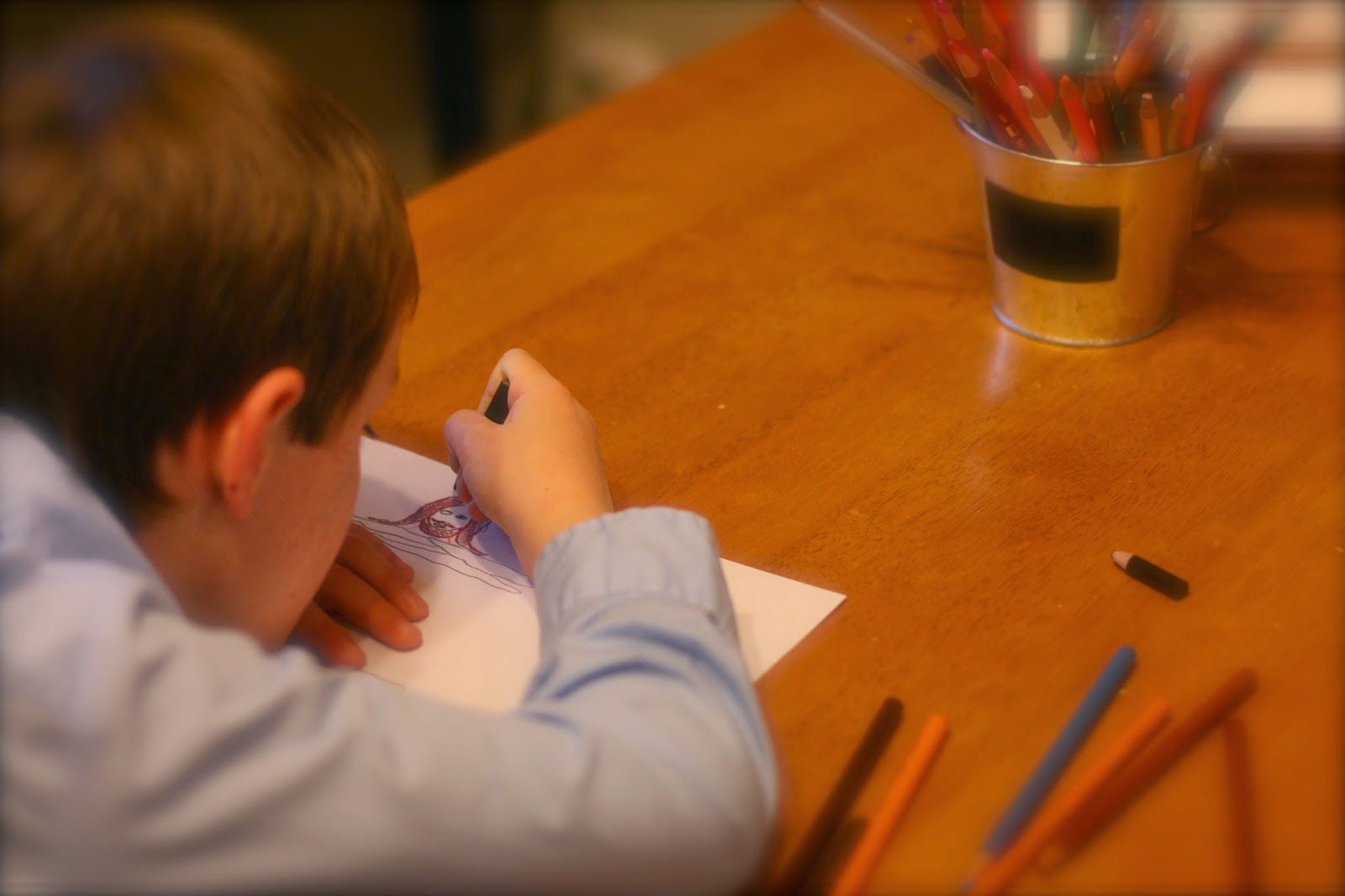
Just recently, my artistic 8-year-old has begun not only copying the main portion of the painting. He has been adding in his own stylistic elements. (see top picture's drawing of Noli me tangere)

And now the Resurrection:


My daughter prefers to do hers more closely adhering to the original work:


How do you do artist study?

Is it an enjoyable addition to your week's educational studies?